Home > Resources > Running the business > Invoicing and getting paid
Invoicing and getting paid
Create professional invoices, get paid on time and keep track of your payments. This guide covers what to include on your invoices, how to send them, different payment methods and what to do if a client is late paying.
Why invoicing properly matters
Professional invoicing helps you get paid, keeps your finances organised and makes your business look credible. It also sets clear expectations with your clients from the start.
Get paid
Makes it clear what is owed and when.
Stay organised
Keep track of what you’ve invoiced and what’s paid.
Look professional
Builds trust with your clients.
Understand your income
Helps you plan and make better decisions.
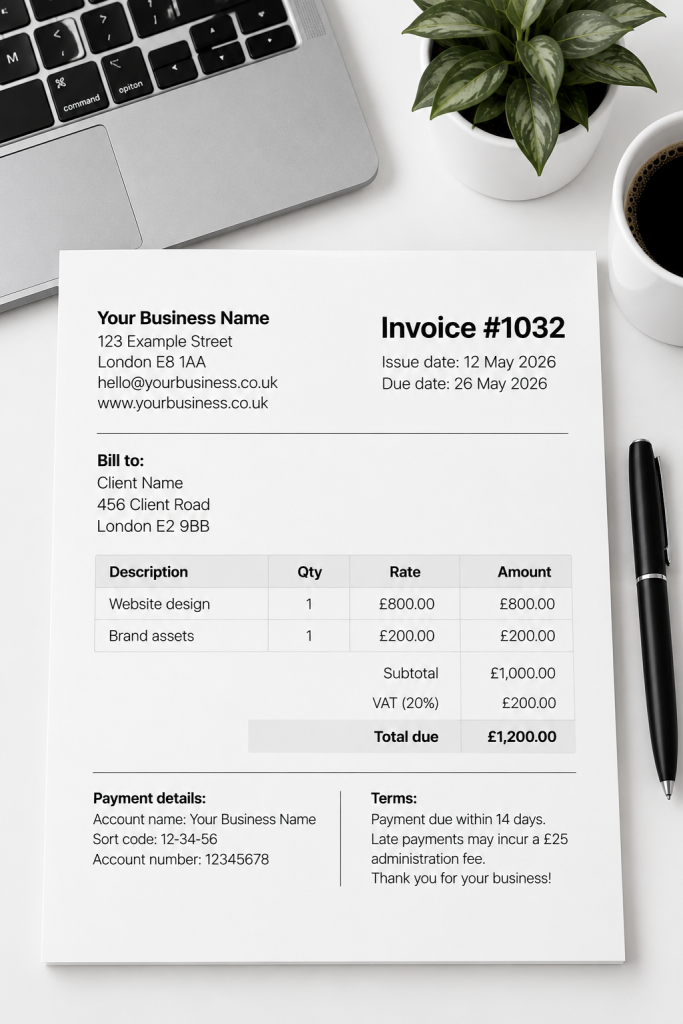
What to include on an invoice
1. Your business details
Business name, address, email, phone number and (if applicable) VAT number.
2. Client details
Client’s name, business name and address.
3. Invoice number
A unique reference number for each invoice.
4. Invoice date and due date
The date you issued the invoice and when payment is due.
5. Description of work or products
A clear breakdown of what you’re charging for, including quantities and rates.
6. Amounts
Show the rate, subtotal, any VAT (if applicable) and the total amount due.
7. Payment details
Your bank details or preferred payment method.
8. Terms and notes
Your payment terms, late payment policy and a thank you message.
How to get paid
There are several ways to get paid. Choose the options that work best for you and your clients.
Bank transfer
A simple and common option. Include your bank details on the invoice.
Card payments
Use a card payment provider to accept debit and credit card payments.
Online payment link
Send a secure payment link so clients can pay online.
Other methods
Consider options like Stripe, PayPal, or accounting software payment links.
Tips for getting paid on time
Be clear about your payment terms from the start.
Send your invoice as soon as the work is completed (or as agreed).
Include all the necessary information.
Use a clear and professional invoice template.
Send a friendly reminder before the due date.
Follow up promptly if payment is late.
Consider asking for a deposit for larger projects.
What to do if a client is late paying
1. Send a polite reminder – If the payment is a few days late, send a friendly reminder.
2. Send a formal follow-up – If the payment is still overdue, send a more formal email with a new deadline.
3. Charge a late fee (if stated in your terms) – If you’ve included a late payment fee in your terms, you can apply it.
4. Pause work – For ongoing projects, consider pausing work until the payment is made.
5. Seek further advice – If the payment is significantly overdue, you may want to seek legal advice or use a debt recovery service.
Let’s work together on your
next web project
Every project is a journey, and we are here to guide you every step of the way.