Home > Resources > Running the business > Keep on top of your finances
Keep on top of your finances
A practical guide to keeping your business finances organised, understanding your numbers and staying in control of cash flow. Learn what to track, what to set aside and how to build a simple routine that helps you make better decisions.
Know your numbers
You do not need complicated spreadsheets or accounting jargon to stay on top of your finances. A few simple habits can help you understand what is coming in, what is going out and what your business can realistically afford.
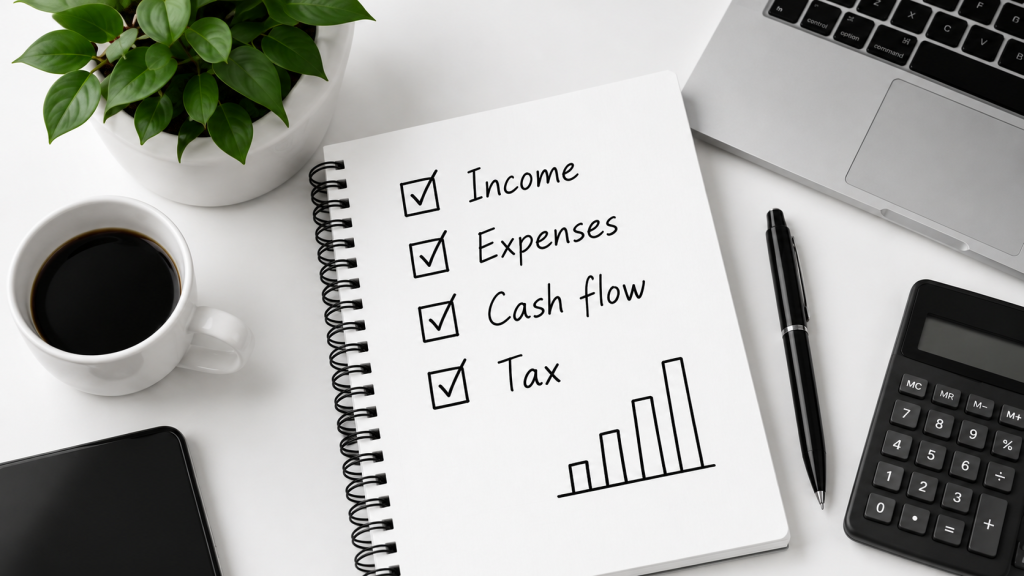
Know income and expenses
Keep records up to date
Set money aside for tax
Review your numbers regularly
1. Start with the key numbers
The aim is to understand the numbers that tell you how your business is doing and whether it is financially healthy.
Income
Money coming into the business from sales, services or other payments.
Expenses
Money going out, including software, materials, bills, travel and other costs.
Profit
What is left after your expenses are taken away from your income.
Cash flow
The timing of money coming in and going out, which affects what you can actually pay for.
2. Keep your records organised
Good records make it easier to understand your finances, prepare for tax and spot problems early.
| What to keep | Examples | Why it matters |
|---|---|---|
| Sales records | Invoices, payment confirmations, receipts | Helps you track income and unpaid work. |
| Expense records | Supplier invoices, purchase receipts, subscriptions | Shows what the business is costing you. |
| Bank records | Business bank statements, card payment reports | Helps you check that your records are accurate. |
| Tax records | VAT records, tax estimates, allowable expenses | Makes tax time easier and reduces mistakes. |
3. Build a simple finance routine
Small regular check-ins are more useful than leaving everything until the end of the month or tax deadline.
Weekly check-in
Record new income and expenses
Match payments received to invoices
Check upcoming bills
Review cash coming in this week
Monthly check-in
Compare income and expenses
Check profit and cash flow
Set money aside for tax
Review what needs attention next month
4. Plan for tax and future costs
Part of staying on top of your finances is making sure future costs do not catch you out.
| Item | What to do | Why it helps |
|---|---|---|
| Tax | Set aside a percentage of income in a separate account | Reduces stress when tax is due. |
| VAT | Track VAT carefully if registered | Helps you avoid underpaying or overpaying. |
| Annual costs | Note renewals, insurance and software subscriptions | Prevents surprise bills. |
| Buffer | Build a cash reserve for quieter periods | Gives the business more stability. |
5. Watch the warning signs
A few patterns can tell you that your finances need attention before the problem becomes bigger.
| What you notice | What it might mean | What to check next |
|---|---|---|
| Cash feels tight even when sales are decent | Money may be coming in too slowly or costs are too high | Check payment timings and regular expenses. |
| Profit is low | Prices may be too low or costs too high | Review pricing and where money is going. |
| Bills keep creeping up | Expenses may be increasing without you noticing | Review subscriptions and recurring costs. |
| You avoid looking at the numbers | Your system may be too complicated or out of date | Simplify your process and review weekly. |
Keep it simple
A finance system only works if you use it. Start small, keep your records tidy and review the numbers that help you make practical decisions.
A simple progress review checklist
Use this checklist to review progress and stay focussed on what matters.
I record income and expenses regularly.
I keep invoices and receipts organised.
I review my cash flow regularly.
I understand my main business costs.
I set money aside for tax.
I know which invoices are still unpaid.
I review my numbers at least once a month.
I use my figures to make decisions.
Related guidance can be found in Running the Business, including Pricing your work, Invoicing and getting paid and Track your progress.
Let’s work together on your
next web project
Every project is a journey, and we are here to guide you every step of the way.